
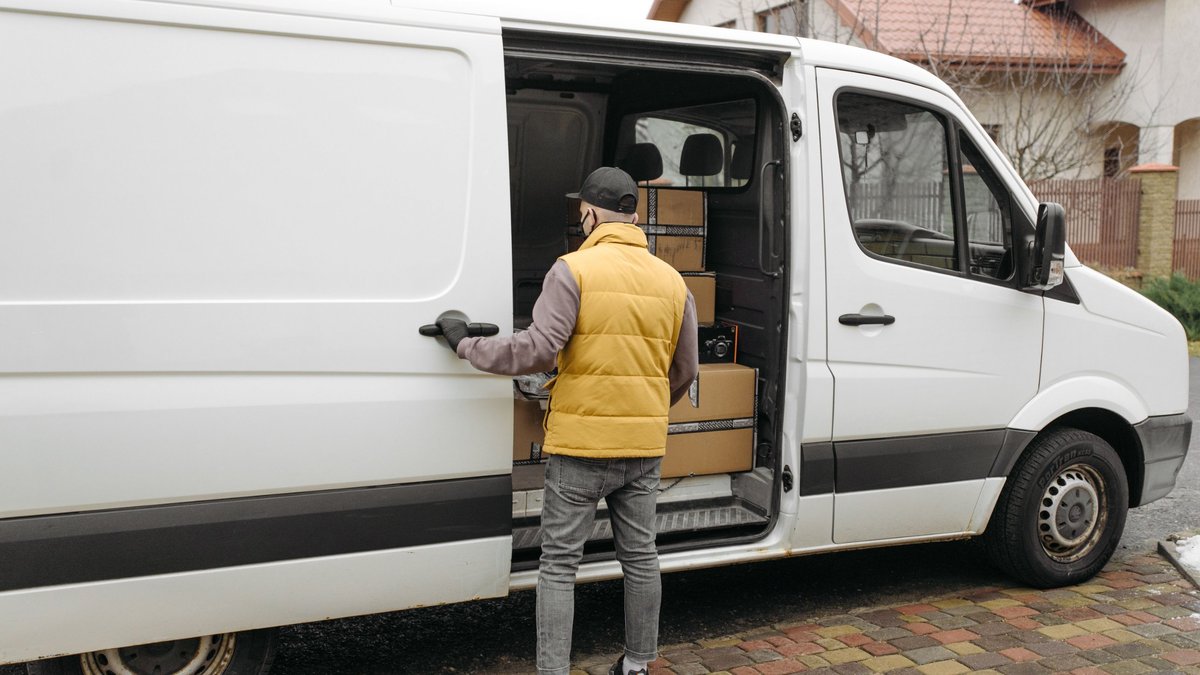
Quick answer: stop safely, check nobody is hurt, swap details with anyone involved, and photograph the scene before you move anything. Then deal with the parcels, tell the company you deliver for, and report the accident to your insurer as soon as you can, even if you do not plan to claim.
An accident while delivering parcels feels different from a bump on the school run. There is a van full of other people's parcels, a schedule that does not stop, and often a client or delivery network waiting for an update. This article walks through what to do, in order, from the moment it happens to getting back on the road.
1. Make the scene safe first
Stop as soon as it is safe, switch off the engine and put your hazard lights on. If anyone is injured, or the vehicles are blocking a busy road, call 999. Get out on the pavement side if you can, and keep away from moving traffic while you check on everyone involved.
Resist the urge to move the van to keep the round going until you have recorded where everything is, unless leaving it there is dangerous.
2. Stop and swap details: what the Highway Code requires
If the collision causes damage or injury to any other person, vehicle, animal or property, the Highway Code (rules 286 and 287) sets out what drivers have to do:
- Stop, and give your own name and address, the vehicle owner's name and address, and the van's registration number to anyone with reasonable grounds to ask.
- If you do not give your details at the scene, report the collision to the police as soon as reasonably practicable, and in any case within 24 hours.
- If someone is injured and you do not show your insurance certificate at the time, report it to the police within 24 hours and produce the certificate for the police within seven days.
If the van belongs to someone else, such as a leasing company, an owner-driver you subcontract for or a delivery network, give the owner's details as well as your own. It helps to keep a card in the cab with the owner's name, address and insurer, so you are not searching for them at the roadside.
3. Record everything while you are still there
Memories fade quickly, and the details you note in the first ten minutes are often the ones an insurer asks about later. Before you leave, collect:
- Photos of all vehicles from several angles, the damage, number plates, road markings, signs and the weather.
- The other driver's details: name, address, phone number, registration, vehicle make and colour, and their insurer if they know it.
- Witnesses: names and phone numbers of anyone who saw it happen.
- Dashcam footage: save the clip straight away so it is not recorded over on your next drive.
- Time and place: the exact location, and what you were doing, for example pulling away from a drop or reversing into a loading bay.
If the other driver will not give their insurer's name, or you are not sure their details are right, the Motor Insurers' Bureau runs a one-off askMID search for people involved in an accident. It can give you the other vehicle's insurer and policy number from its registration.
Keep your comments at the scene to the facts. Saying sorry is a natural reaction, but avoid agreeing who was to blame until your insurer has the full picture.
4. Deal with the parcels in the back
The parcels are someone else's property, and a collision can damage them even when the van looks fine. Before you carry on, open the back and check the load:
- Photograph any parcels that have moved, split or been crushed, along with their labels.
- Scan or note the barcodes of anything damaged, and set those parcels apart from the rest of the load.
- Follow the damaged-item process of the company you deliver for, rather than handing a crushed box to a customer.
Your van policy usually covers the vehicle and your liability to other people, not the goods inside. Damage to the parcels themselves falls under goods in transit cover, if you hold it, so check its conditions and tell that insurer too.
5. Tell the company you deliver for
Most parcel networks, courier firms and direct clients have their own reporting steps for accidents and delayed deliveries, and some set a short deadline. Let them know as soon as you are safe, explain which drops may be late, and ask whether they want the remaining parcels returned, collected or delivered by someone else. Keep a note of who you spoke to and when.
6. Report it to your insurer, even if you do not plan to claim
Most motor policies ask you to report any accident promptly, whether or not you make a claim. Leaving it, or deciding to settle privately, can cause problems if the other driver claims against you weeks later. When you call, have your policy number, the other driver's details, your photos and any dashcam footage ready.
This is also the moment when the class of use on your policy matters. If you were carrying other people's goods for payment, insurers expect the van to be covered for courier work. A policy for social use or carriage of your own goods may not respond to an accident that happened on a paid round. Our page on hire and reward cover for paid deliveries explains the difference.
If someone else was driving your van when it happened, such as a relief driver, a family member or a subcontractor, check that they were covered to drive it before you report. Any driver cover for shared courier vans works differently from a policy with named drivers.
7. Getting back on the road
For a courier, a van off the road usually means lost income as well as a repair bill. Ask your insurer early whether your policy includes a replacement vehicle, and whether that vehicle is covered for courier work, as some courtesy cars and vans are provided for personal use only. If the accident was not your fault, ask how the other side's insurer handles replacement vehicles and repairs.
When you next review your cover, it is worth checking what a courier van insurance policy usually includes, such as breakdown cover, a replacement van and legal expenses, so you know where you stand before anything else happens.
Accident checklist to keep in the cab
- Stop safely, hazards on, call 999 if anyone is hurt or the road is blocked.
- Swap names, addresses and registrations, including the van owner's details.
- Photograph the vehicles, damage, plates and the road layout.
- Take witness names and numbers, and save any dashcam clip.
- Check the load and record any damaged parcels.
- Tell the company you deliver for.
- Report to the police within 24 hours if details were not exchanged, or if someone was injured and you did not show your insurance certificate.
- Call your insurer, and your goods in transit insurer if parcels were damaged.
Questions drivers ask after an accident
Do I have to report a minor bump to the police?
Not if you stopped and gave your details to everyone who had reasonable grounds to ask for them. If you could not give your details at the scene, for example after hitting a parked car with no owner around, the Highway Code says to report it to the police as soon as reasonably practicable and within 24 hours. Leaving a note alone does not count as giving your details.
Can I finish my round after an accident?
Only if the van is safe to drive and you are fit to carry on. Check the lights, tyres, mirrors and doors, and look underneath for leaks. If in doubt, stop and arrange recovery, and let the company you deliver for know so the remaining parcels can be handled.
Will an accident that was not my fault affect my insurance?
It can still need declaring. Insurers usually ask about all accidents and claims within a set period when you renew or buy a new policy, whoever was at fault. How much it affects the price depends on the insurer and whether costs were recovered from the other driver.